| Insect Orders Information Page Life Cycle Page | Moths of Iowa Saturniidae Imperial Moth | |
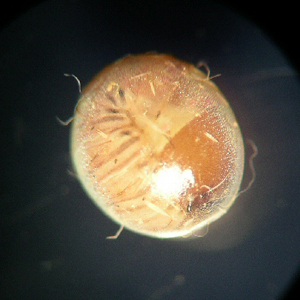
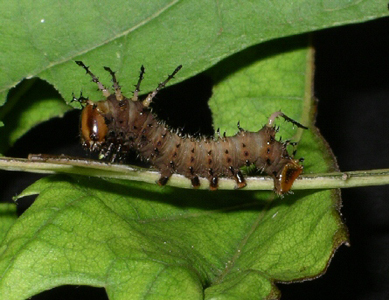
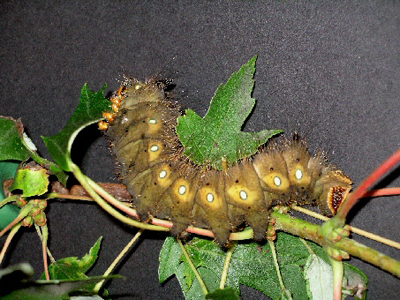
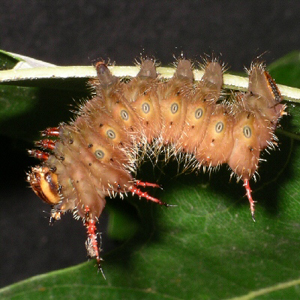
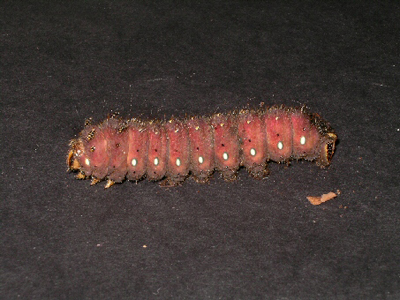
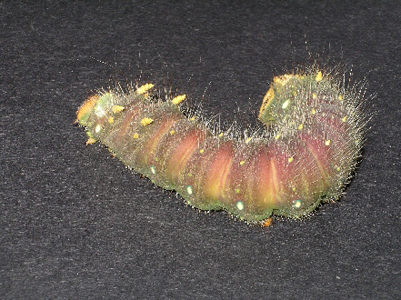
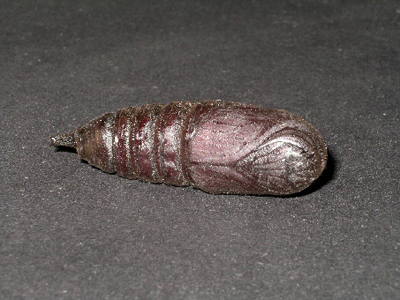
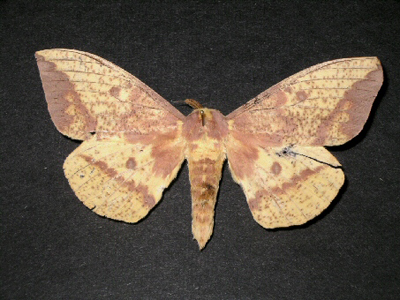
Pictures 3 through 7 show the Imperial caterpillars. The eggs were laid by a moth that I caught at Behren’s Pond on July 17, 2004. The eggs took 10-14 days to hatch. The caterpillars took 4-6 weeks to pupate. I raised 9 Imperials to maturity. The caterpillars were fed Maple leaves. These caterpillars grew to be four inches long and 1/2 wide. Right at the time they reached maturity, I was having to change the leaves every day as they would eat the leaves right down to the stems. Picture 1 shows the eggs prior to hatching, picture 2 shows a caterpillar that is almost ready to hatch from the egg. The picture is taken through a microscope. Pictures 3 through 7 show the caterpillars through the growth stage of about 1/2 inch to full grown of four inches. If you look at Picture 5 and see the circles on the side of the caterpillar (spiracles), these are what the caterpillars breathes through. Picture 6/7 shows the caterpillar the day before he pupated. They turned a reddish or green color. Picture 8 shows the pupa. The pupa are formed after the caterpillar crawls around, finds a good spot to burrow under ground, forms a space around it and then pupates. The skin is shed as the pupa is formed. The pupa will remain underground through the winter months. The moth will exit the pupa in late May to June and crawl to the surface where it will find a plant stem to crawl up, let it’s wings fill up with fluid and harden. After the wings harden the females release pheromones that attract males. After mating the female will lay eggs on host plants in different places and then dies after a couple weeks. The Imperial Moths do not eat in the adult stage. Picture 9 shows an Imperial moth. | ||
 |  |  |
 |  |  |
 |  |  |